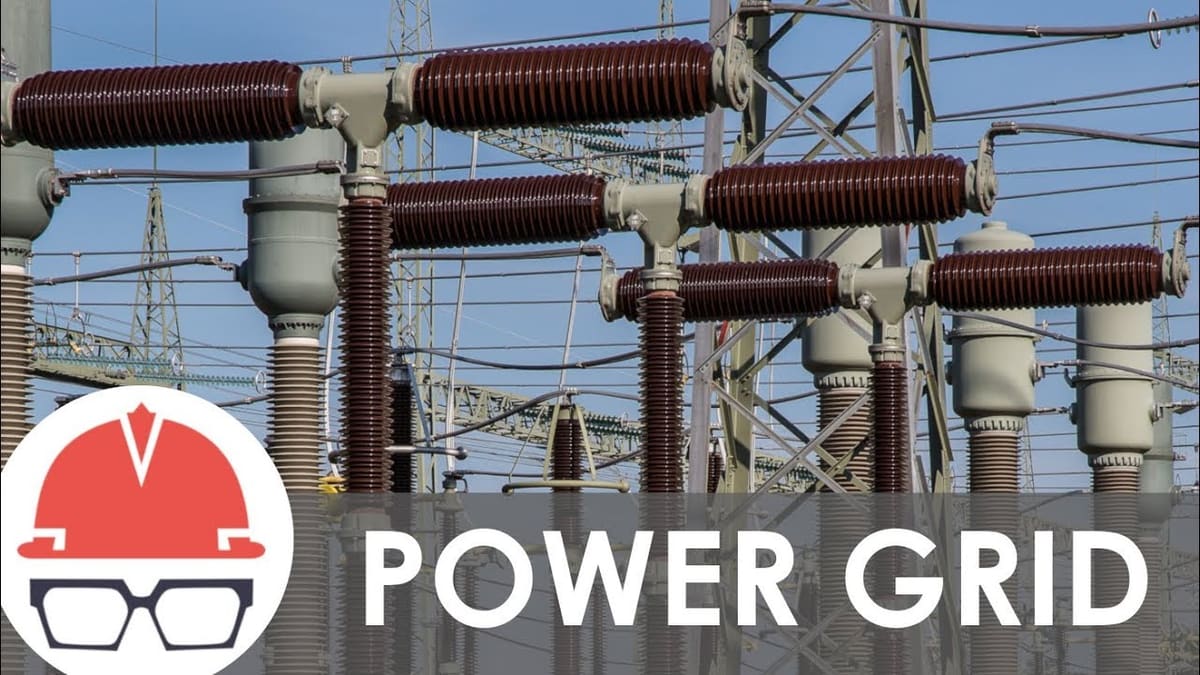
A smart grid is an electricity or heat network that can sense its own state and act on it — rerouting around faults, shifting demand, absorbing local generation. The metering rollout everyone argues about is the prerequisite, not the product.
The atlas holds more than 30 documented entries across 21 cities in 16 countries, from a 2000-vintage innovation district to heat tunnels under construction in 2026. Coverage is concentrated in Europe, Asia and North America — a genuine gap in this field that no amount of framing can fix. This guide connects to the smart grid definition.
Four layers, built in order
| Layer | Examples | What it delivers |
|---|
| Metering | Vienna, Tokyo | Visibility. Slow, expensive, legally mandated, rarely popular |
| Self-healing distribution | Chattanooga, Dubai | Fewer and shorter outages — the clearest measurable win |
| Local generation & storage | Berlin EUREF, Amsterdam ArenA | Peak smoothing, resilience, a testbed for the rest |
| Demand response | Shanghai, Copenhagen | Capacity without building capacity — the field's newest layer |
The best-evidenced case is a municipal utility
Chattanooga's EPB is the strongest record in this topic, and one of the few anywhere in the atlas graded on independent evidence. The city-owned utility approved a fibre-backed smart grid in 2008; roughly 1,200 automated switches now reroute power around faults, cutting annual outage minutes by about half. A 2024 University of Tennessee at Chattanooga study valued the combined fibre and grid systems at $5.3 billion in net community benefit for the county since 2011, including 417 million+ outage minutes prevented.
The transferable part is not the technology but the ownership structure. The same fibre that carries grid telemetry made Chattanooga the first US city with community-wide gigabit internet. One asset, two business cases — which is how a utility justifies a network that grid reliability alone might not pay for.
Dubai's DEWA reports the same physics from a very different institutional setting: Customer Minutes Lost down from 6.88 minutes a year in 2012 to 0.82 minutes by 2025. Official figures — but the direction and the mechanism match Chattanooga's independently studied result.
Demand response is where the action moved
Building generation is slow. Not needing it is fast. Shanghai's virtual power plant aggregates data centres, building air conditioning and EV chargers into a resource the utility can call on: during an August 2025 heatwave it reports shifting 1.163 million kW drawn from 47 aggregators — operator-reported, not independently audited. Copenhagen does the heat-side equivalent, cutting morning peak load by up to 22% in its pilot and now covering 140 buildings with roughly 8 MW of flexible capacity.
Amsterdam's stadium battery is the most quietly instructive of these: 3 MW built substantially from 148 repurposed Nissan LEAF batteries, in service since 2018 and expanded to 8.6 MWh in 2024, with a vehicle-to-grid pilot on visitors' cars. Second-life batteries, an existing building, no new land.
Where it stalls
Buiksloterham's positive energy district is the honest counterweight, graded scaled-back on independent evidence: the grid operator could supply only about a quarter of the requested connection capacity, forcing a pivot away from peer-to-peer energy trading toward flexibility management. The constraint was the cable in the street, not the software on top of it — a pattern many European districts are now meeting.
Stockholm's GrowSmarter records the financing version of the same wall: deep retrofits demonstrably pay off, and replication stalls anyway without financing models that work for ordinary landlords. And Singapore's Punggol district illustrates the reporting trap — its solar and CO₂ figures are explicitly labelled projected, not measured. A large share of smart-grid publicity elsewhere consists of exactly such projections quoted as results.
Who pays, and who gets paid
Two models recur. Vienna's citizen power plants let residents buy €250 shares in municipal solar and wind, with more than 12,200 people investing over €40 million — the utility keeps ownership, residents get a small guaranteed return. Helsinki's Suvilahti plant rents individual panels to residents without their own roof; it sold out within days. Neither is community ownership in the strict sense, and both entries say so — but both convert grid investment into something a resident can point at.
Questions to ask before procurement
- Which layer are you actually buying? Meters give visibility; nothing else on this page works without them, and they deliver little on their own.
- Is the connection capacity there? Ask the network operator before designing the district, not after.
- Projected or measured? Require both numbers, dated, in every vendor claim.
- What else can the network carry? Chattanooga's case rests on the fibre earning twice.
- Can demand response substitute for capacity? It is cheaper and faster than generation, and it needs contracts more than hardware.
- Who owns the asset in 20 years? The best-evidenced entry here is municipally owned; that is unlikely to be a coincidence.
The practical takeaway: outage reduction is the win that shows up in independent evidence; demand response is the win available without building anything. The failures cluster around grid connections and landlord financing — both decided long before the smart part is procured.